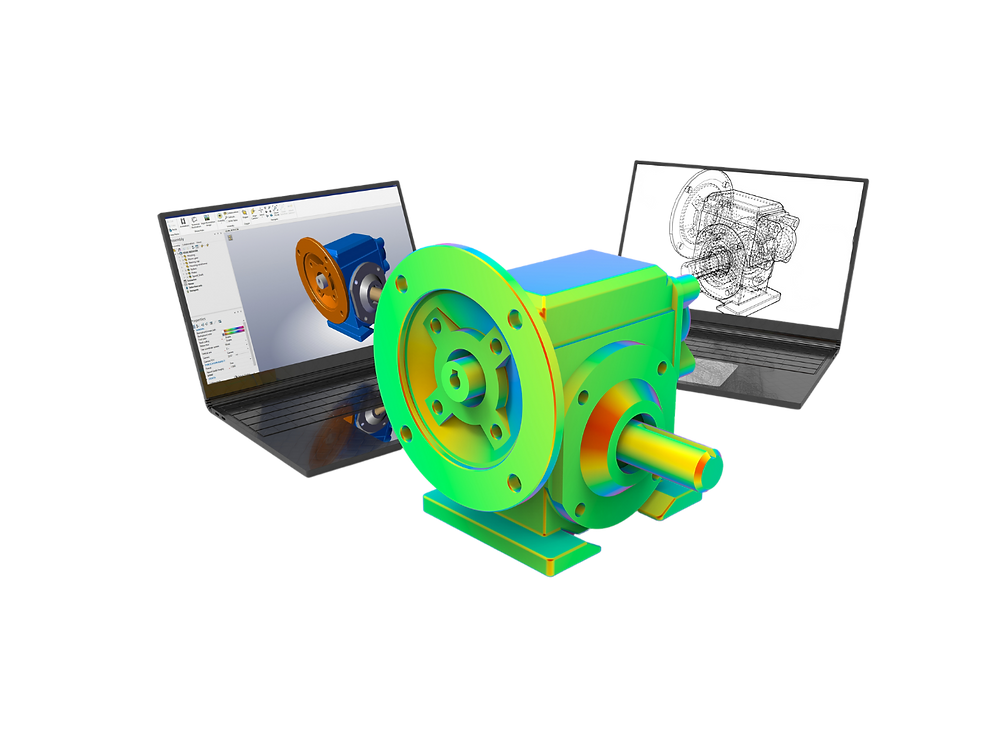
What is MSC Patran?
MSC Patran is a comprehensive FEA pre/post-processor that provides a rich set of tools for building finite element models, applying loads and boundary conditions, and visualising results — supporting MSC Nastran, Abaqus, Ansys, and LS-DYNA solvers.
Originally developed by PDA Engineering in the 1970s and later acquired by MSC Software (now Hexagon), Patran is the oldest and most widely adopted FEA pre/post-processor. Because of its ubiquity — particularly in aerospace, defence, and automotive — engineers can share Patran models across organisations without format conversion. Available for Windows and Linux. Rated 3.8/5 from professional reviews.
Pros and cons of MSC Patran
| Pros | Cons |
|---|---|
| Most widely used FEA pre/post-processor — inter-company collaboration without format conversion | Outdated GUI — Windows 2006-era aesthetic, not modernised |
| Comprehensive — acoustics, additive manufacturing, fatigue, structural, thermal, optimisation | Steep learning curve; limited customisation room within the interface |
| Multi-solver support: MSC Nastran, Abaqus, Ansys, LS-DYNA, Marc | Expensive for small businesses; implementation costs can be significant |
| PCL scripting for automation of repetitive model setup tasks | PCL is proprietary and has a limited community vs. Python-based tools |
| Extensive validation history — decades of industry trust | Not suitable for multi-physics coupling |
MSC Patran pricing
MSC Patran is available from approximately $5,000 per license per year — typically quoted as part of a bundle with MSC Nastran. Contact Hexagon (MSC Software) for specific pricing and volume discounts.
A student/academic edition is available from recognised universities. Subscription or token-based licensing may also be available depending on region and agreement. Evaluation licenses can be requested from Hexagon.
Key features of MSC Patran
Multi-solver architecture
Patran's biggest technical advantage is its multi-solver support: MSC Nastran, MD Nastran, Abaqus, Ansys, LS-DYNA, and Marc. You build the model once in Patran, then export to any supported solver — reducing rework when switching between solvers or collaborating with partners using different analysis tools.
Comprehensive analysis coverage
Linear statics, normal modes, buckling, thermal, acoustic, fatigue/durability, nonlinear statics, dynamics (frequency response, transient response, random vibration), additive manufacturing process simulation, and structural optimisation. Patran's breadth covers the majority of aerospace and automotive structural analysis needs.
PCL automation
PCL (Patran Command Language) enables scripting of model creation, modification, and analysis setup. While PCL's proprietary nature limits its community versus Python, experienced Patran users leverage it extensively to automate repetitive workflows — parametric model generation, automated load case creation, and results extraction.
Composite materials support
Patran has strong support for laminated composite materials: ply-by-ply definition, material orientation systems, laminate theory calculations, and compatibility with composite analysis codes. Critical for aerospace structural programs where CFRP is the primary structural material.
Target market
MSC Patran targets aerospace, defence, and automotive organisations already embedded in Nastran ecosystems. It is the standard at Boeing, Airbus, Lockheed Martin, Northrop Grumman, and many automotive OEMs and Tier 1 suppliers. Small teams and startups are better served by Femap or HyperMesh, which have more modern interfaces and lower entry barriers.
Alternatives to MSC Patran
| Alternative | Best for | Key difference |
|---|---|---|
| Siemens Femap | Nastran workflows, Siemens PLM teams | More modern UI; easier to learn; less industry ubiquity than Patran |
| Altair HyperMesh | High-quality meshing, multi-solver | Industry-leading meshing; unit-based licensing; also supports Nastran |
| Abaqus CAE | Nonlinear analysis workflows | Better for nonlinear material/contact; Abaqus solver ecosystem |
| Ansys Workbench | Multi-physics, Ansys ecosystem | More intuitive modern interface; multi-physics; higher entry cost |
Frequently asked questions
What is MSC Patran used for?
MSC Patran is a comprehensive FEA pre/post-processor used to build finite element models, apply loads and boundary conditions, and visualise simulation results for MSC Nastran, Abaqus, Ansys, and other solvers.
How much does MSC Patran cost?
~$5,000/license/year, typically bundled with MSC Nastran. Contact Hexagon for volume pricing and academic licenses.
What is the difference between Patran and Femap?
Both are FEA pre/post-processors for Nastran. Patran is more widely adopted across the industry; Femap has a more modern interface and is easier to learn but is more tightly integrated with the Siemens PLM ecosystem.
What scripting language does Patran use?
PCL (Patran Command Language) — a proprietary scripting language. Powerful for automation but with a smaller community than Python-based tools.